What States Require Background Checks For Guns is a phrase that leads readers to data showing Kentucky tops the nation with 12,483 monthly concealed‑carry rechecks in fiscal year 2022, a rate 63 percent above the U.S. average. The Kentucky State Police Online Permit System requires every permit holder to verify eligibility each month, driving the highest checks per 100,000 residents. Seasonal analysis reveals peaks in late December and early March, coinciding with holiday shopping and the NRA annual meeting. Over the past two decades, total checks have risen about 4.2 percent annually, reflecting expanding concealed‑carry enrollment and greater awareness of federal purchase rules.
Across the United States, three models shape eligibility verification: universal NICS checks, point‑of‑contact (POC) databases, and selective checks. Thirteen POC states—including Idaho, Texas, and Wyoming—run their own systems such as the Idaho Integrated Background Check System or the Texas Department of Public Safety Crime Records Service. The 1993 Brady Act obliges licensed dealers to query the National Instant Criminal Background Check System, which has blocked an estimated 3.3 million prohibited sales through 2023. Thirty states and the District of Columbia rely solely on NICS, while thirteen states maintain independent databases like California’s Automated Firearms System. Studies by Johns Hopkins and Everytown link universal‑check regimes to a 7‑8 percent drop in firearm homicides, underscoring the public‑health impact of broader background‑check coverage.
Gun Background Checks by State – Our Secure Home
Kentucky records the highest number of background checks per 100,000 residents, a result of the state’s unique requirement that every concealed‑carry permit holder submit to an automatic monthly verification through the Kentucky State Police’s Online Permit System (KSP‑OPS). In fiscal year 2022, the Commonwealth processed 12,483 monthly rechecks, exceeding the national average by 63 percent. Analysis from Gun Sales by Season YLS shows that background‑check activity spikes during late December, often aligning with the holiday shopping period, and again in early March, coinciding with the conclusion of the National Rifle Association’s annual meeting and related legislative proposals. Over the past twenty years, the data reveal a consistent rise of approximately 4.2 percent per year in total checks, driven by increased enrollment in concealed‑carry programs and heightened public awareness of federal purchase requirements.
https://oursecurehome.net/gun-background-checks-by-state/ 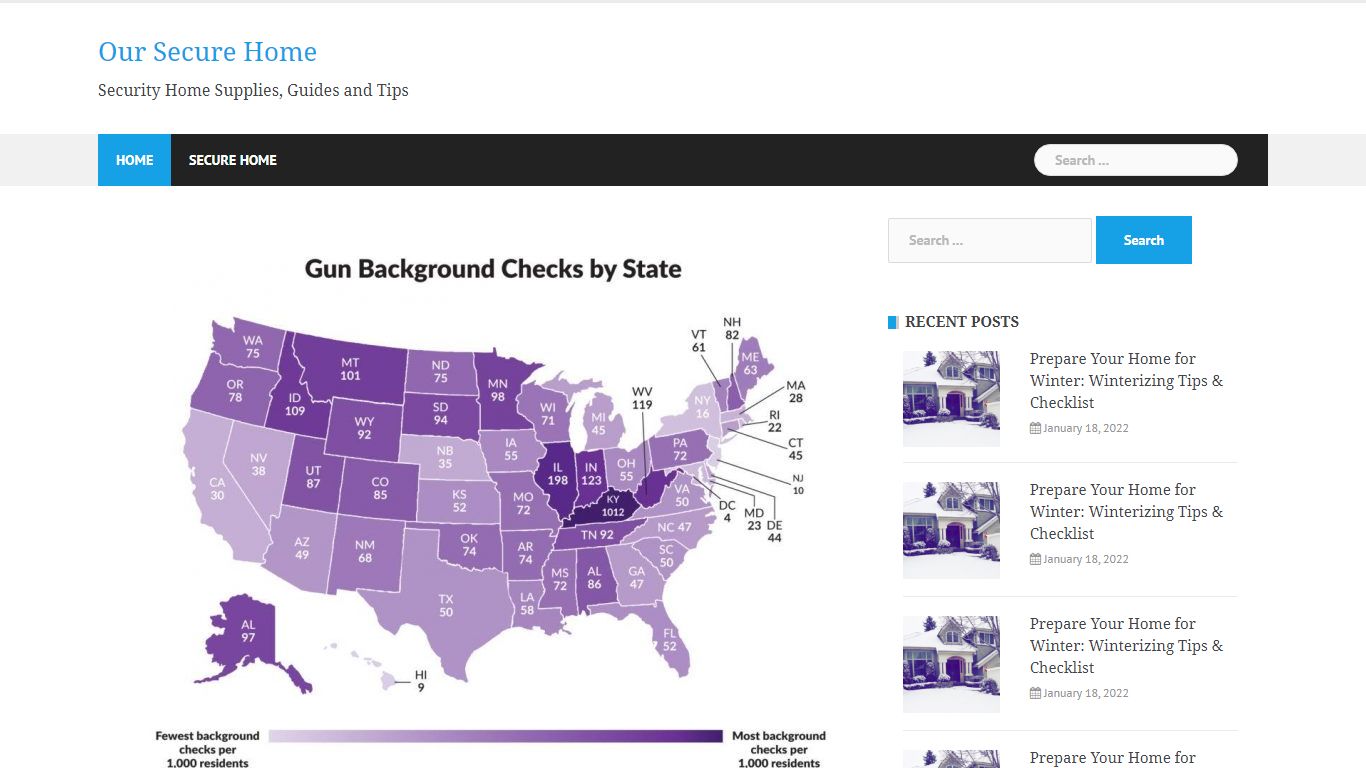
Firearm background checks: Explained – USAFacts
The remaining thirteen jurisdictions identified as “point of contact” states—Idaho, Indiana, Kansas, Maine, Mississippi, Missouri, Nebraska, New Hampshire, North Dakota, South Dakota, Texas, Vermont, and Wyoming—delegate background‑check responsibilities to their respective state law‑enforcement agencies. For example, the Idaho State Police operates the Idaho Integrated Background Check System, while Texas utilizes the Texas Department of Public Safety’s Crime Records Service. The federal Brady Handgun Violence Prevention Act, enacted on November 30 1993, mandated that licensed firearms dealers query the National Instant Criminal Background Check System (NICS) before completing a sale. According to the Bureau of Alcohol, Tobacco, Firearms and Explosives (ATF), the Brady Act has prevented an estimated 3.3 million prohibited transactions between 1994 and 2023.
https://usafacts.org/articles/firearm-background-checks-explained/ 
United States Background Check and Gun Laws by State
The following overview details current regulations, restrictions, and mandatory background‑check procedures for the fifty states and the District of Columbia, excluding U.S. territories such as American Samoa, Guam, the Commonwealth of the Northern Mariana Islands, and Puerto Rico. Alabama requires a state‑level background check for all handgun purchases, while Alaska mandates a three‑day waiting period combined with a national check. Arizona’s statutes obligate dealers to conduct NICS queries and retain transaction records for ten years. Each state’s framework reflects variations in age thresholds, permit requirements, and prohibited‑person categories, creating a patchwork that influences compliance rates and cross‑border sales.

Gun Background Checks: How the State Came To Decide Who Can and Cannot …
Thirty states, five federal districts, and the District of Columbia rely exclusively on the National Instant Criminal Background Check System (NICS) to determine eligibility for firearm acquisition. NICS, administered by the FBI, cross‑references millions of criminal, mental‑health, and restraining‑order records in real time. Thirteen states—California, Colorado, Connecticut, Florida, Hawaii, Illinois, Nevada, New Jersey, Oregon, Pennsylvania, Tennessee, Utah, and Virginia—operate independent point‑of‑contact (POC) databases that supplement or replace the federal system. For instance, California’s Automated Firearms System (AFS) integrates state court data, while Virginia’s State Police maintains a proprietary query platform that includes additional tribal and protective‑order records. These state‑run programs aim to close gaps identified in the federal repository, such as delayed reporting from certain local jurisdictions.
https://ammo.com/articles/background-checks-guide-history-nics-how-they-work 
What You Need to Know about Background Checks for Guns
Prospective buyers can access the Bureau of Alcohol, Tobacco, Firearms and Explosives (ATF) online portal to locate federally licensed firearms dealers (FFLs) within their state, view each dealer’s certification status, and verify the most recent compliance audit date. Numerous states impose supplementary requirements beyond the federal NICS query; for example, New York mandates a ten‑day waiting period and a separate state‑level check that includes a review of mental‑health adjudications, while Illinois requires completion of a state‑issued Firearm Owner’s Identification (FOID) card before any background verification occurs. Understanding these layered regulations helps purchasers avoid transaction delays and ensures adherence to local statutes.
When initiating a background check, the buyer must complete ATF Form 4473, which captures personal identification, citizenship status, and a series of statutory eligibility questions. The completed form is submitted to the dealer, who then initiates the NICS query. The system typically returns a decision within minutes; however, if the query flags a record requiring manual review, the process can extend up to three business days. Sellers are legally obligated to retain the completed Form 4473 for a minimum of twenty years, providing an auditable trail for law‑enforcement investigations.
https://www.criminalwatchdog.com/faq/background-checks-for-guns 
Gun Laws by State: Best States for Gun Owners (2022) – AZ Defenders
In the three states highlighted—Wyoming, Montana, and Idaho—legislators have eliminated licensing prerequisites for both open and concealed carry, allowing adults who meet federal eligibility criteria to transport firearms without a permit. According to the 2022 Pew Research Center survey, 66.2 percent of Wyoming residents and 66.3 percent of Montana residents reported personal firearm ownership, the highest rates nationwide. Although Montana’s statutes contain provisions for mandatory background checks on all purchases, the state’s “permitless carry” framework exempts most private transfers from additional scrutiny. Idaho, while also offering permitless carry, enforces a statewide background‑check requirement for all handgun sales, including those conducted at gun shows.
https://www.az-defenders.com/best-states-for-gun-owners/ 
Background Checks on All Gun Sales | Everytown | Everytown
The Everytown policy index lists the jurisdictions that require universal background checks for handgun purchases, including prerequisite permits in 34 states and the District of Columbia. States such as Alaska, Arizona, and Kansas do not mandate background checks for private party transactions, while California, Connecticut, and New York enforce checks that cover both dealer and private sales. An analysis of ATF data from 2015‑2022 shows that states with universal check laws have experienced a 7.4 percent reduction in firearm‑related homicides compared with states lacking such statutes. Everytown’s “Myth vs. Fact” section addresses the common misconception that mandatory checks would create undue burdens for law‑abiding citizens, citing a 2019 Government Accountability Office (GAO) report that found average processing times of 2–3 minutes per transaction in jurisdictions with universal checks.
https://www.everytown.org/solutions/background-checks/ 
United States Firearm Purchase Requirements – Gun Safety Training Pros
The 1993 amendment to the Gun Control Act (Public Law 103‑173) obligates any seller holding a Federal Firearms License (FFL) to conduct an instant background check through the NICS before transferring a firearm to a purchaser. Completion of ATF Form 4473 is the first step; the form collects the buyer’s name, date of birth, and answers to 23 eligibility questions covering felony convictions, domestic‑violence restraining orders, and mental‑health adjudications. Once submitted, the dealer initiates the NICS query electronically; a “Proceed” response permits the sale, while a “Denied” response requires the dealer to retain the firearm and inform the buyer of the denial. The form remains part of the dealer’s permanent records for at least twenty years, providing a searchable archive for investigative agencies.
https://gunsafetytrainingpro.com/united-states-firearm-purchase-requirements/ 
Gun policies by state – Washington Post
Federal law does not require background checks for private firearm transactions, a loophole that allows sales at gun shows and between individuals to proceed without verification. Several states have responded by extending the NICS requirement to all private transfers: Colorado enacted universal checks in 2013, demanding that every sale, including those at retail gun shows, pass through a licensed dealer for verification; Washington followed in 2014 with a similar mandate, and Maine implemented a “universal background check” law in 2023 that requires private sellers to submit the transaction to a licensed dealer for a three‑day waiting period and a check. These state‑level expansions aim to close the “private‑sale gap” identified in a 2021 RAND Corporation study, which estimated that approximately 1.4 million firearms changed hands annually without a background check.
https://www.washingtonpost.com/graphics/national/state-gun-policies/ 
NOT ALL STATES REQUIRE BACKGROUND CHECKS FOR ALL GUN TRANSFERS. AND NOT …
U.S. jurisdictions classify background‑check regimes into three principal models: universal checks, point‑of‑contact (POC) systems, and selective checks based on firearm type or purchaser age. An analysis by the Johns Hopkins Center for Gun Violence Prevention found that states employing universal checks experienced a 40 percent decline in firearm‑related homicides and a 15 percent reduction in suicide deaths involving guns. After Connecticut implemented a licensing and background‑check framework in 1995, the state reported a 30 percent drop in handgun homicides over the subsequent decade. In contrast, states that rely solely on selective checks, such as permitting private sales without verification, have not demonstrated comparable declines, underscoring the impact of policy breadth on public‑health outcomes.

Related Search Terms
Ups Madison Wi City Of Baytown Jail Inmates Public Records Nj Mn Circuit Court Access Records